
The "Situation Machine" Outlining Method
How to use premise + situations to fuel your story & finish your book

This month, I’m taking you on a tour of my favorite outlining methods before the release of OUTLINES, a craft class where you’ll learn new forms of organizing story and staying on top of drafting and revision.
The first outline method, and the first module of our class, is my most-used outlining strategy!
The Situation Machine
Why I created it:
I realized that I was reinventing the wheel when I got about 30% into writing a new book. Suddenly, coming up with scenes became much harder than the beginning, and I struggled to make sure that they were thematically coherent and building towards something meaningful. I felt my worldbuilding slip away or come in and out without consistency, and I would write scenes that I knew would get cut later.
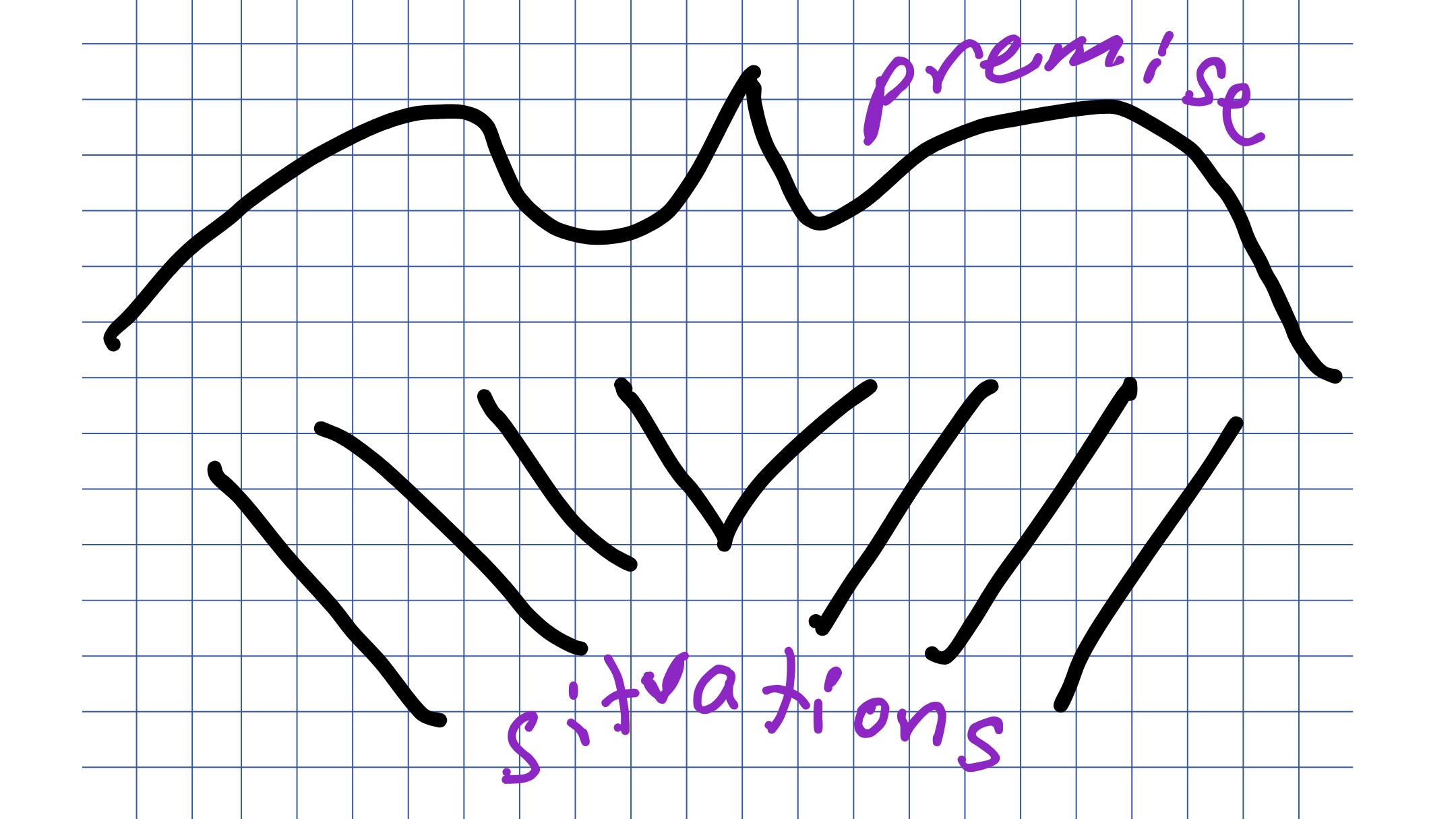
When I studied the way that propulsive stories worked, I realized that a strong premise was at the core of the book. All of the scenes were derived from and connected to this central premise. That became my guide for understanding this story format, and reverse engineering an outline that I could fill in for my next books.
Who it’s for:
The Situation Machine is going to help you out if you want to draft a book quickly, but make sure that the scenes are still connected to the central arc.
It will also help you evaluate which book is ready to be drafted next, as evaluating and fine-tuning your premise is the most important step.
My favorite part of this outlining method is that the scene list that you create from it has genuinely interesting situations that make you excited to write. I always find that spending time on my Situation Machine makes the book write itself!
What you’ll need:
These are just a few of the outlining steps we will go over in class to create our situation machines:
Define your premise: bring together elements like worldbuilding, inciting incidents, and real-world inspirations
Test your premise: close up easy solutions and address plot holes
Unfold your premise: explore the active groups, belief systems, and power structures within the world
Generate situations: build your scene list based on the central premise
Decide on scope: which aspects of the premise you will zoom in on during the book
Clarify character: choose your main character and cast by taking a cross-section of the premise
Assign situations: create scenes that are tailored for characters to create maximum drama, momentum, and thematic consistency
How to use it:
Have high standards when choosing your next writing project. Make sure that the premise ‘holds water’ and is going to generate enough scenes for a book-length work. Take your time going through your list of ideas and testing them.
While outlining, make sure to consider every facet of your premise. Make lists that correspond to;
all of the groups of people involved,
the powerful/powerless,
the benefits/repercussions of magic or another source of power, and
sentiments and beliefs that are building & boiling over by the time the story starts.
Enjoy drafting! You’ll find that stories that are organized with this machine feel like they are writing themselves, because they have a strong infrastructure behind them while maintaining an element of surprise. Because all of your scenes will be strongly connected to the premise, you can use your artistic instincts to decide which ones to write and how the outcome will unfold.
You’re invited to OUTLINES class, where we’ll invent your specific situation machines with detailed templates + worksheets + examples!